


Switching from a Traditional to Concierge Medical Practice Model: What to Consider
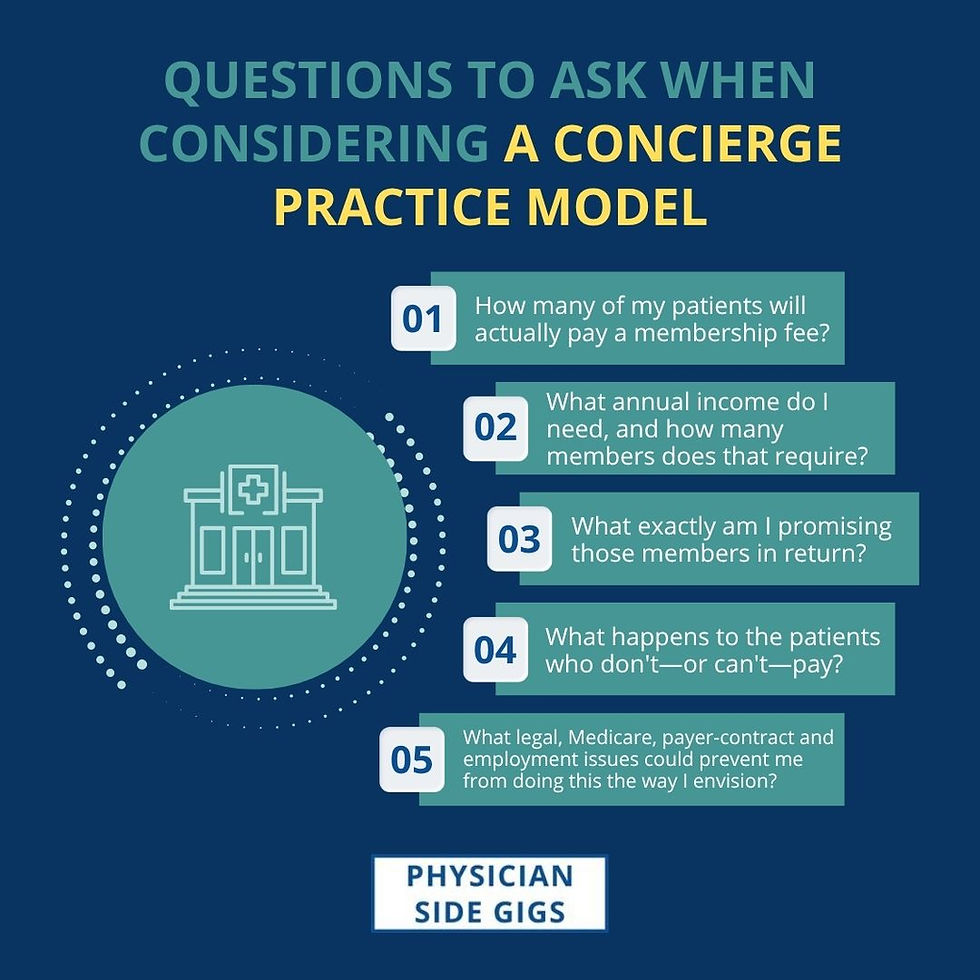
As physicians become increasingly frustrated with traditional practice models, declining reimbursements, and the pressure to see more patients, we are seeing more questions in our online physician communities about different practice models such as direct primary care and concierge medicine. It’s important to understand exactly what you’re getting into when you’re thinking about making the switch to concierge. This is not just a change in how you do billing, but a fundamental shift in how you practice medicine. Your patient panel, your workflows, and your patient’s expectations of you will all change. Below, we explore the things a physician should think about when considering a switch to a concierge medical practice model.
Disclosure/Disclaimer: This page contains information about our sponsors and/or affiliate links, which support us monetarily at no cost to you. These should be viewed as introductions rather than formal recommendations. Our content is for generalized educational purposes. While we try to ensure it is accurate and updated, we cannot guarantee it. Rules/laws can change frequently. We are not formal financial, legal, or tax professionals and do not provide individualized advice specific to your situation. You should consult these as appropriate and/or do your own due diligence before making decisions based on this page. To learn more, visit our disclaimers and disclosures.
How easy is it to switch to a concierge practice if you have a traditional insurance based practice model?
The long and short of it is that it may be more complicated than you think. Successfully transitioning from one practice model to the other will require multiple things to go right, as there are several legal, regulatory, and patient considerations you’ll have to consider. You’ll want to plan well in advance of an anticipated switch to concierge medicine, and you’ll likely want to work with a healthcare attorney to navigate these.
PSG Resource: Find healthcare attorneys for physicians in your state.
What’s the difference between direct primary care and concierge medical practice models?
There are several similarities between direct primary care and concierge models, and as such, they’re often conflated or confused. Both focus on smaller patient panels and a deeper physician patient relationship, and involve the patient paying a fee to be a part of the practice. However, a key difference is that concierge practices also bill insurance, in addition to the membership fees.
Read more in our dedicated article on similarities and differences between direct primary care and concierge medical practice models.

Make your best estimate of how many of your patients will follow you if you switch to concierge (and what you want your panel size to be)
The first thing you’re going to want to think about is how big your panel will be in your ideal situation. The attractiveness of concierge medicine is the ability to have more time with each patient because you have less patients to see, so more is not always better. Working backwards from a typical day is a good place to start, because you can think about how much time you want with each patient and how many hours you want to work to work back to how many patients you can see in a day. By combining that with how many times a year you think you’ll see each patient, you can back into your ideal panel size (and set your fees accordingly).
The fact is that you won’t know how many patients will follow you with certainty until you try. While many in our communities say that somewhere between 20-50% of their patients have followed them, that is a very large range when you’re plotting out the economics of your practice.
Your situation will depend heavily on the demographics of your patient population and how many of them can afford a concierge model, waitlists to be seen in your area, and generally speaking, the strength of your existing relationship with your patient. You’ll probably get a lot of questions from your patients about why you’re making a switch, as well as some upset patients, so you’ll want to make sure they understand what they gain from a switch to concierge medicine models, exactly how it works, and what they can expect. You’ll also want to stay clear of patient abandonment claims and make sure that you have backup options for care for patients who do not follow you to your concierge model.
Financial modeling related to a concierge medicine
Piggybacking off the last point, once you’ve estimated how many patients will follow you initially, you’ll want to start modeling what this looks like in the immediate short term, as well as how you anticipate growth in the next few years.This will be critical as you create the pro forma for your practice to understand whether you have a viable model before making the switch to concierge medicine.
Whereas a normal medical panel for your practice may consist of a few thousand patients, in concierge medicine, you’ll typically max out with a panel of a few hundred patients.
Membership fees can vary widely from a thousand dollars or so to several times that amount, so determine what you think your market will tolerate.
Once you make these projections, you can simulate a financial model and calculate a breakeven point.
Revenue = (# of patients in your membership x annual membership fees) + the expected revenue from insurance or other payers
From that revenue, just like with any practice, you’ll have to subtract out expenses.
You should calculate financial models based on your worst case scenario, a middle ground, and your best case scenarios of the number of patients you’ll have in your practice to understand if you can survive the ramp up period or what your fees will need to be to offset losses on the insurance side from the smaller number of patients.
Regulatory and Legal Considerations, including the decision to opt out of Medicare
This can get complicated fast, as different states have different laws and regulations regarding concierge services and practices. It will also be very important to make sure that you stay within payer guidelines, including ensuring that membership fees are kept separate from insurance based payments and that you are in compliance with Medicare rules. You’ll want a very clear contract for patients to sign to demonstrate your intention to stay in compliance with these rules.
A dedicated word about Medicare: if you opt to stay in Medicare, you’ll have to follow strict rules about what you can charge extra for. Some physicians in concierge models choose to opt out of Medicare for this reason.
Learn more about opting out of Medicare.

Decide what you’re comfortable offering and what your value proposition is for the concierge practice
As you set your membership fee (and decide whether patients will pay it), you’re going to need to clearly delineate what your value proposition is to justify these additional expenses for the patient. Typically, this will include things such as:
Longer visits
Increased access to you, including potentially after hours
Same or next day appointments
Care coordination and assistance navigating specialists
House calls
The key to sustainability will be setting boundaries that offer value to the patients while preserving a good lifestyle for you. You’ll have to be careful that the patients don’t think they have unlimited 24/7 access to you by setting clear expectations about what constitutes an emergency, how quickly they should expect answers to their questions, how after hours issues are handled, what vacation coverage looks like, and what services are included versus separately billed.
Think about what happens to your existing patients
This is the part that is most stressful for a lot of physicians considering making the switch, both from a logistical perspective as well as an ethical perspective. Leaving patients behind doesn’t feel good, but the reality is that not all patients will (or will be able to) follow you.
Ask yourself:
Am I going to grandfather in any patients to my practice, who don’t need to be in the concierge model?
Will I give existing patients more competitive pricing?
Who will I refer the patients who don’t want to stay with me to?
You must avoid accusations of patient abandonment
You’ll want to ensure that you have a system in place for the patients that can’t join your new concierge model. This may include helping them find another physician, transferring their records, giving them adequate notice, and more.
Remember that the transition doesn’t have to happen overnight
While you could decide to go ahead and convert the entire practice at once, a smoother (and potentially financially safer) approach may be to continue in a hybrid model while you build the concierge practice or to try a small pilot panel to ensure you enjoy that model and that it’s financially viable. This will also give your existing patients time to get used to the new model or find another practice for the long term.
Conclusion
Shifting to a concierge practice model is a huge change in the way that you interact with your patients and practice medicine. It’s not for everyone - you’ll be expected to be much more accessible and you’ll need to set clear boundaries. However, it will open up the possibility of longer patient appointments and a stronger doctor-physician relationship, so if you’re exicted by it, try it!
Additional resources for new private practice physicians
Sign up for our weekly PSG newsletter for alerts on new educational content, free webinars, and more.
Related PSG resources:
Private practice resources from our partners (with perks for our members!)
Attorneys for physicians Private practice educational resources
Credentialing and Contracting With Insurance Companies and Payors: Tips and Tricks
Creating a Budget or Pro forma for Your New Private Practice Startup's Business Plan
Ways To Increase Your Private Practice Revenue and Address Increasing Overhead
What to Consider When Hiring a Medical Assistant for Your Private Practice
How Website Search Engine Optimization (SEO) Improves Private Practice and Business Marketing