


How and Where to Find Moonlighting Opportunities
One of the most classic side hustles for physicians is moonlighting. Doctors often start hearing about or looking for moonlighting opportunities in training, and many continue to moonlight well into their careers for supplemental income. However, it’s not always easy to find moonlighting gigs, as many are filled internally or via word of mouth, and as such, we often have physicians posting about how to get started with moonlighting in our online communities for doctors. Below, we’ll cover advice given by members about where they’ve had success finding these positions, what employers are often looking for moonlighters, and how to reach out to hiring parties effectively.
Disclosure/Disclaimer: Our content is for generalized educational purposes. While we try to ensure it is accurate and updated, we cannot guarantee it. We are not formal financial, legal, or tax professionals and do not provide individualized advice specific to your situation. You should consult these as appropriate and/or do your own due diligence before making decisions based on this page. To learn more, visit our disclaimers and disclosures.

Article Navigation
What is moonlighting, and what are the different types of moonlighting opportunities?
What are the advantages and disadvantages of internal moonlighting?
What are the advantages and disadvantages of external moonlighting?
What kinds of places offer moonlighting jobs or opportunities?
What specialties tend to get more moonlighting opportunities?
What should I know before accepting a moonlighting job opportunity?
Additional side gig or moonlighting related resources for physicians
What is moonlighting, and what are the different types of moonlighting opportunities?
While there’s some overlap between locums, per diem positions, and moonlighting, classically doctors tend to refer to moonlighting as doing additional work as a physician outside of their primary job or training program. These could be residents and fellows taking on shifts at their institution or at an urgent care, hospitalists or emergency medicine docs picking up shifts at other institutions, or other physicians providing on call coverage for other groups.
There are two main categories of moonlighting, internal and external moonlighting.
Internal moonlighting is when you take on work inside of the same institution or employer that you work for in your primary job.
External moonlighting is when you take on work outside of the institution or employer that you work for in your primary job.
What are the advantages and disadvantages of internal moonlighting?
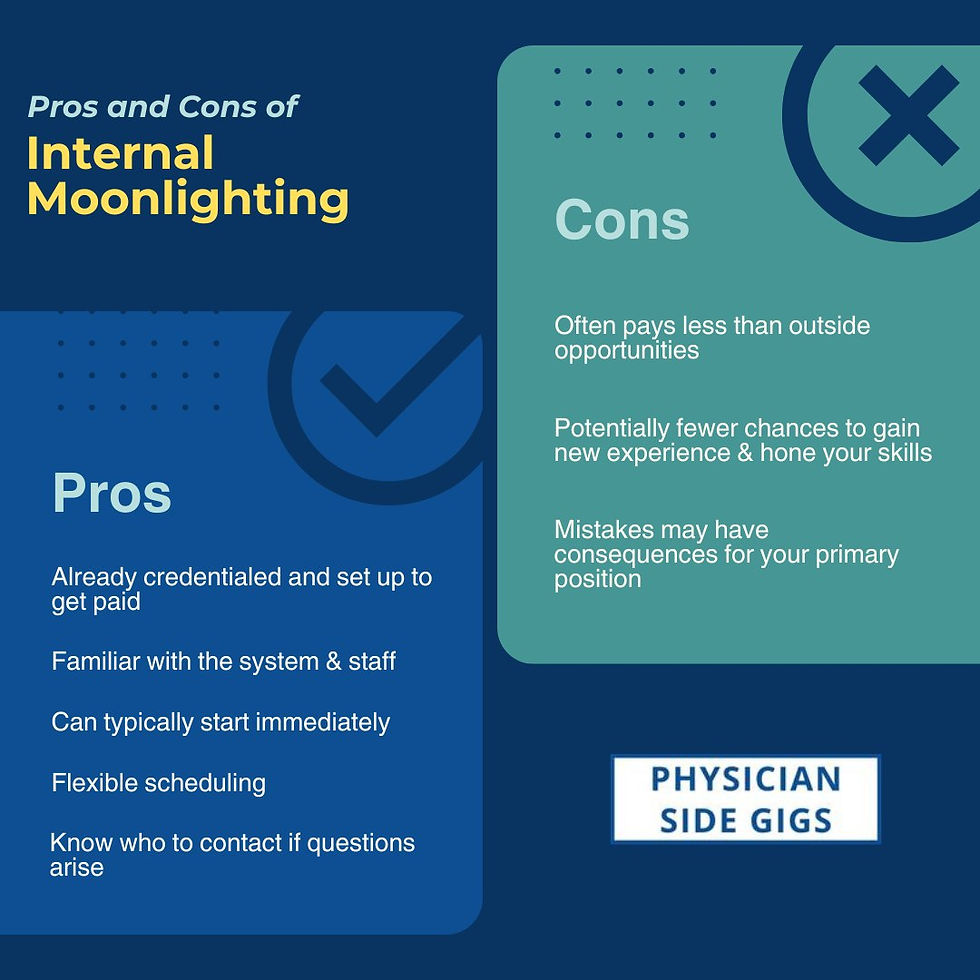
Pros of internal moonlighting
There are several benefits to doing it this way, primarily related to ease. These include:
You are already credentialed at the institution
They already have a way of paying you
You already know the systems and people there
Since you’re already set up in the system, you can typically start immediately
You can do it as often (or as rarely) as you want without having to worry about creating extra work for yourself or others
If you’re a resident or fellow, you probably know who to call for help if you find yourself uncomfortable in a particular situation
Cons of internal moonlighting
On the flip side, there are some significant cons of internal moonlighting, depending on your goals. These include:
Because there’s often a healthy pool of people wanting to make some extra money on the side within an institution and because of the ease of it, these positions typically pay less than equivalent positions outside of your institution
There may be less opportunities to learn from new patient populations, get experience with a system outside of your comfort zone, and have to make decisions without access to your mentors or peers, which will help you hone your skills as an attending
Making a mistake in this environment could spill over into consequences related to your primary position.
What are the advantages and disadvantages of external moonlighting?

Pros of external moonlighting
These are really opportunities to act as an attending outside of your primary training program or primary job, which can be particularly attractive to residents, fellows, or early career attendings. As such:
You’ll typically get paid a lot more, as many of these positions are offered at hard to fill permanent positions. This includes rural hospitals, urgent cares, overnight or weekend hours that pay better, or other opportunities that may be unattractive to the permanent staff who’s willing to pay to have it taken off their plate.
You’ll gain exposure to new patient populations, case mixes, and people.
You may learn different models of practice, such as private practice, rural or community medicine.
You may be forced to do more independent decision making, which will foster your transition to attending life
Cons of external moonlighting
In general, there are more logistics and hassles associated with external moonlighting, so the barrier to getting started is higher, and you have to be willing to do enough moonlighting that the lemon is worth the squeeze. These include:
Everything credentialing - hospital privileges, DEA, background checks, onboarding, compliance, required training modules, etc.
Getting to know new systems, EHRs, people, etc.
Possibly having to get permission from your job or training program
Securing malpractice insurance (hopefully the job offers it, though)
Potentially a different form of getting paid (for example, 1099 vs W2, and learning about self employed income) and having to do things like file quarterly taxes
Additionally, depending on where the job is, you may introduce travel logistics, licensing in a new state, DEA numbers, out of state taxes.

What kinds of places offer moonlighting jobs or opportunities?
These days, there are several opportunities to ‘moonlight,’ including virtually. These include:
Hospitals (private, public, academic)
Private practices
Urgent Cares
Telemedicine platforms
Psychiatric hospitals
Veterans Affairs (VA) hospitals or facilities
Correctional medicine
Radiology groups requiring contrast reaction monitoring/treatment
Skilled nursing facilities (SNF) or rehab facilities
Anesthesia call coverage or facility coverage
What specialties tend to get more moonlighting opportunities?
This really depends on what is being asked for. Hospitals tend to look more for hospitalists, emergency medicine doctors, and family and internal medicine physicians. Urgent cares also look for these specialties as well as pediatricians. However, hospitals and private practice groups often need specialty call coverage or vacation coverage, or may even have more permanent needs secondary to staffing shortages, and this applies to all specialties. Telemedicine companies can have a wide range of required expertise from many different specialties in addition to primary care or emergency medicine. These days there are lots of opportunities for psychiatrists, for example. Many outpatient imaging facilities require a physician on site if contrast is being administered, and these jobs are often offered to radiology residents.
How do I find moonlighting opportunities?
For internal moonlighting opportunities, this is pretty straightforward. Keep an eye out for emails within your institution, and talk to your co-residents, program director, or department head.
Finding external opportunities may require more of an active effort, including looking for postings or contacting people to let them know you’re interested. Some places to start:
Private and academic hospitals in your area
Private practices in your area
Alumni networks from your programs
Asking other residents and fellows nearby where they’re moonlighting, if applicable
Affiliated VA systems
Facilities in your area, such as correctional facilities, SNFs, etc.
Telemedicine opportunities
Job Boards, including our Physician Job Board with opportunities from our members
Recruitment companies or recruiters
How do you find the best moonlighting opportunities?
Most of the best moonlighting opportunities fill quickly via word of mouth and via connections. You’re going to want to get plugged into these.
Ask your co-residents and attendings, and former residents in their program where to start. They’ll probably have the best leads, and may be able to offer a warm connection.
Join specialty specific forums, physician Facebook groups, or similar
Network at your state or local medical society meetings
Proactively reach out to hospitals, urgent cares, private practices, and other institutions by emailing their HR departments, reaching out to physicians in the group that can put you in charge with the right people, or utilizing LinkedIn or other professional networks
Consider connecting with recruiters if they’re known to have good opportunities in your field or search online for moonlighting opportunities in your area
Sign up for our newsletter, where we sometimes post moonlighting opportunities from physicians in our communities
What should I know before accepting a moonlighting job opportunity?
There are important things to verify before you accept a job offer to moonlight. These include:
Making sure that you don’t have any restrictions in your physician contract for side gigs, and if you do, get permission
Verify that you have malpractice coverage (and whether it’s claims made or occurrence, and whether they provide tail insurance if needed)
How you’ll get paid, and if it’s 1099 or W2, as it’ll affect your taxes
Credentialing and licensing requirements if external moonlighting
Policies for canceled shifts (review this article on red flags in locums contracts; many apply here)
Related PSG resource:
If you need an attorney to review your arrangement, check out our directory of contract attorneys for physicians
Conclusion
Moonlighting can be a great way for physicians, both in training and out of training, to make some extra cash. Often, the best opportunities aren’t advertised, so if you want to get these, make sure you utilize your network as well as reach out proactively to places that you may want to moonlight. Internal moonlighting and external moonlighting each have their own pros and cons, so decide what works better for your situation and goals accordingly.
Additional side gig or moonlighting related resources for physicians
Sign up for our weekly newsletter for alerts about upcoming side gig opportunities, educational webinars and resources, and more.
Related PSG resources: